Friday, September 6, 2013
US Based Horse Slaughter Plants Officially Shuttered By Order of Federal Judge, Until at Least Oct. 31, 2013
BREAKING NEWS Via Wayne Pacelle, President of the HSUS
"Great news! U.S.-based horse slaughter plants are now officially shuttered, by order of a federal judge, at the least until October 31st. At that point judge will make a permanent ruling on the case brought against USDA by The Humane Society of the United States and Front Range Equine Rescue."
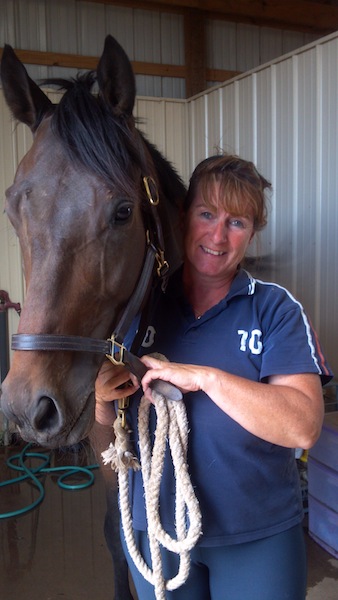
(Pictured are Declan and Wayne Pacelle after a meeting they had to discuss the issue of horse slaughter and horse welfare, in Washington DC in March 2012).
Thursday, September 5, 2013
Girl Age 12, Saves Two Young Horses From Slaughter
It is very uplifting to read about other young horse advocates! ~Declan
Cape Elizabeth girl, 12, saves two young horses from slaughter
Darcie Moore | The Times Record
Meghan Murphy, 12, of Cape Elizabeth, poses with Dreamer and Murphy at Triple J Farm in Bowdoin on Wednesday. The two horses were saved last month from a kill pen in Washington state.
By Darcie Moore, Times Record
BOWDOIN, Maine — The horses were to go on the truck at 2 p.m., headed to slaughter from a Washington state “kill pen.”
Meghan Murphy, a Cape Elizabeth 12-year-old, was online looking for a riding horse to lease when she found a website called Auction Horses.
“I clicked on it and I saw there was this little 11-month-old that they were going to kill, and they were stopping feeding him on the day that I had found him,” Meghan said. “I decided that I couldn’t spend my money on me just getting a horse to ride when a horse is going to die if I didn’t help him.”
The horse, Geronimo, she renamed Dreamer, short for Dream Catcher.
Unexpectedly, she also rescued a second horse, GummyBear, renamed Murphy for his resemblance to a jumper named Murphy’s Irish Gem.
Slipping a blue halter onto 4-month-old Murphy in a small pasture at Triple J Farm in Bowdoin last week, Meghan recalled their first meeting.
“Dreamer wouldn’t get on the trailer without [Murphy], so I said I’d take both of them,” she said.
She kissed Murphy on the forehead.
“I just decided that if I didn’t save him, he was going to die.
“He was only 4 months old. So it was a pretty easy decision.”
Kill pens
Meghan found them at 11:30 a.m. and said she had two and a half hours to find them temporary quarantine.
Kill pens are not supposed to be allowed to kill foals still with their mothers; these two were orphaned, Meghan said.
“Their mothers were killed, we’re guessing when they were around two months, because their mothers would be fat at that point and sent to a slaughterhouse.”
Meghan said that without Dreamer taking Murphy under his wing, “there’s no doubt in my mind that Murphy would have died, because Dreamer protects him.”
The girl notes scars on Dreamer’s body, most notably a kick mark on his forehead.
In a kill pen, a stallion like Murphy would go in with other stallions ranging from his age to 20 years old, “and they would kill him.”
It’s a practice and industry Meghan has been learning about, and disagrees with.
Horses have been bred to be companions, not to be killed or eaten, she said.
“It’s really hard to think that someone would kill them, and it’s not a business that needs to exist or should exist,” she said. “Kill pens shouldn’t exist, and slaughter shouldn’t exist. Slaughter really exists because of overbreeding, breeders and backyard breeders.”
There are kill pens over the border in Canada where horses in Maine get shipped, Meghan said, as well as in Mexico.
According to a June U.S. News article about federal approval of a slaughter plant in New Mexico, horse meat can’t be sold in the United States but can be exported, and is sold for consumption in China, Russia, Mexico and other countries.
Meghan said “kill buyers” can be found at auctions, bidding on the least-desired horses so they won’t be outbid, spending probably not more than $20 each on a horse.
“So really what needs to happen is slaughter needs to stop, because we can’t rescue them one at a time.”
Safety in Bowdoin
Meghan said she has been getting the horses used to lead lines, halters, turnout, grooming and people.
Just since their arrival a week ago on Aug. 23, Murphy showed how he could be led, walking in a circle and backwards.
The young horses also have to be trained to pick up their feet so the farrier can come. Murphy tends to point his toes outward, probably because it was easier to stand like that with weak bones — a result of malnutrition.
He has already put on some fat in place of bone, filling out in his neck, legs and hips, and his ribs aren’t as visible as when he was rescued, Meghan said.
The horses had stopped being fed Aug. 9, she said, “He’s just been eating and eating and eating,” Meghan said of Murphy after he arrived.
Meghan’s parents were supportive of her mission to save Dreamer — and then Murphy, too — as long as she paid for them.
Her mother, Debbie, told her she could make all the phone calls — except to the actual kill pen.
Calling help
Meghan’s first call was to Jan Marconi, who owns Triple J with her husband, Jim, off U.S. Route 201 in Bowdoin.
Marconi connected Meghan with Brogan Horton, who is involved in rescue work all over the country, and put Meghan in touch with a rescuer in Washington state, Lauri Smith, who was able to go and get Dreamer and Murphy.
Smith also quarantined the horses, which is required before they can cross state borders, and pointed Murphy to quotes for transporting the horses to Maine.
That’s where Keene Kessler and Brooke Bullard Thomas of Horse Carriage Transport found her.
Usually booked for days, weeks or months, Keene Kessler happened to find himself in the proximity of Washington state in between jobs and decided to connect with Meghan.
Without charge, Kessler drove the two horses more than 3,000 miles in seven days to Bowdoin, never leaving them alone until they arrived the night of Aug. 23.
Kessler stayed overnight and helped Meghan give the two horses what was probably their first baths ever the next morning.
Murphy has never been handled and, like Dreamer, never experienced grass or trees.
“It takes patience and a lot of love and care,” Meghan said. “You can’t rush them.”
She’s received many donations and contributions — from carrots to shampoo.
“Five dollars pays for one bale of hay, and one bale of hay gives them two days of food,” Murphy said.
Everything helps.
Happy at the Triple J
Her two rescuees will be very happy at Triple J.
Every horse wants a job, and these horses will tell her if they want to be ridden, jumpers, or be “pasture buddies,” Meghan said.
When it comes down to it, horses are wild animals, she said, and “they let us ride them. Riding is a privilege.”
Her whirlwind effort to save these horses “has helped to shape me as a person, but it’s about the horses,” she adds.
“The American dream is really that everyone gets an equal opportunity and an equal chance and everyone deserves second chances. And if I didn’t rescue them … they weren’t even going to get a first chance.”
Triple J Farm’s Home of Healing Horses is the farm’s therapy program, “and I hope that … if they can be used for therapy, I’m going to let them be used in the therapy program because I helped them, and maybe someday they can help other people,” Meghan said.
“They’re so much happier,” she said on the hot, sunny day last week as the two young horses grazed, then let a reporter take their picture.
They were in shock when they arrived, she said. But already they have bonded with her.
Her big plans for them?
“I just want them to be happy,” she said.
Meghan says she couldn’t have saved Dreamer and Murphy without the help of several people: Jan and Jim Marconi; her parents; Keene Kessler and Brooke Bullard Thomas of Horse Carriage Transport; Brogan Horton; Lauri Smith; Lauren Atherton; her mentor, Chris Lombard; and many others.
Fun and funds
“I’ll be raising money for a while,” Meghan said. The corrective trimming by the farrier will be expensive and she’ll be paying $400 a month for the combined board of both horses, which is also discounted.
By mowing and babysitting, she had saved nearly $3,000 when she set out to lease a horse, and the impromptu rescue has left her with closer to $1,400.
She has paid the first month of board, and said she is thankful someone has committed to cover the following month’s board.
But she still needs shoes and medicine, and is trying to get veterinarian services discounted.
The horses have worms, and Meghan is going to try to get her 4-month-old horse extra-nourishing food.
“I pet-sit; I baby-sit; I work any jobs I can. I mow lawns and stuff to help pay for them, but it’s just not enough,” Meghan said. “We’re not rich.”
She jokes that, at age 12, “I have bills!”
While mowing lawns and babysitting may help, she’ll likely need more assistance keeping the horses on the right track.
She can be contacted at 799-8899 or by email at mjmurphyii@myfairpoint.net.
With future costs piling up, is it daunting?
“I have no regrets,” Murphy said. “I had help, but I saved two lives, and I don’t regret it at all.”
Now That's Getting On Your High Horse: He's 10ft Tall, Weighs A Ton And Is So Big No Saddle Fits Him.
WOW, I never knew a horse could get SOOOO big! That is amazing!!! ~Declan
Now that's getting on your high horse: He's 10ft tall, weighs a ton and is so big no saddle fits him
By Robert HardmanPUBLISHED: 19:17 EST, 29 August 2013 | UPDATED: 19:17 EST, 29 August 2013
As posted on MailOnline
The main challenge when it comes to riding Sovereign is not the riding bit. It is the simple business of clinging on.
For Sovereign is not just Europe’s tallest horse. He also has no saddle. ‘We did have one once,’ says Sovereign’s owner, Paul Evans. ‘But then he just got too big around the girth and it didn’t fit any more.’
Oh great. I am about to ride bareback on something the size of an entry-level elephant. At that height, I am going to need a parachute rather than a helmet.
Uneasy rider: Robert Hardman bareback astride Sovereign, the four-year-old Shire horse who is, at 10ft tall, believed to be Britain's biggest, at the home of his owner Paul Evans, 39, in Werrington, Staffordshire
But how do I get up there in the first place? With no saddle, there are no stirrups and with no stirrups it’s like climbing a ladder without any rungs. Paul produces a stepladder with plenty of rungs but even that is no use. Sovereign is almost 10ft tall at the tips of his ears and nearly 7ft tall at the shoulders.
So, we create a makeshift set of steps involving a crate and an oil drum and Paul gently heaves the behemoth alongside. Finally, it’s just about possible to sling a leg over this colossal spine and I am on board. Because Sovereign is so broad, it is particularly uncomfortable, rather like trying to sit astride a van.
Now what? With a leading rein in one hand and a clump of his mane in the other, I give him the gentlest of nudges with my heels. No response. Maybe he hasn’t felt a thing. Given that he weighs more than a ton, perhaps he is not even aware that he has this lump sprawled on his back.
Oh dear. I don’t want to try anything more than a — very short — walk but if I kick any harder, he might take off. Because Sovereign is not some slothful old nag. He’s a four-year-old Shire horse, full of beans and still growing.
Fortunately, he is also a softie at heart. He gets the message and starts plodding around the yard for a few minutes before coming back to an obliging halt next to the oil drum.
And after a well-deserved carrot or eight, Sovereign returns to his field and his best friend, Poppy, who has been keeping a jealous eye on everything.
The only way aboard: With no saddle that will fit Sovereign, thus no stirrups, Hardman had to clamber up this makeshift set of steps involving a crate and oil drum as owner Paul gently heaves the horse alongside
It’s a contented, quiet life in a pretty bit of Staffordshire, just beyond the potteries of Stoke-on-Trent. And this could easily be the happy ending to a sorry tale.
Two years ago, Sovereign was a neglected wreck with rotten teeth and a hoof infection when Paul first came across him. Now he is in tip-top condition with a loving owner, a devoted companion and all the grass he can eat.
But this story is about to head off in a new and completely different direction. World stardom beckons — not that Sovereign or his owner seem remotely bothered. A few years from now, Sovereign might not only be the tallest horse in Europe. It’s highly likely he’ll be the biggest horse on the planet.
‘He was big when I got him but, seeing him every day, I suppose I never noticed he was that big,’ says Paul, 39. ‘Then the other day, a friend who knows his horses said to me: “You know, that really is a big horse”. So when the vet next came round, I asked her to measure him properly.’
Horses are measured in ‘hands’ (one hand equals 4in or 10.16 cm) from the floor to the withers — the top of the animal’s shoulder blade. Anything under 14.2 (14 hands and 2in) is a pony. Anything over that height is a horse. The average racing thoroughbred is 16 hands. For a heavy horse breed like the Shire (formerly known as the English Cart Horse), the average height is a little over 17 hands.
To everyone’s astonishment, Sovereign measured 20 hands and 2in. Until then, Europe’s tallest horse had been Digger, a 19.3 Clydesdale serving with the Household Cavalry. So the Sovereign’s record has been snatched by a horse called Sovereign.
Rescued: Sovereign was a neglected wreck with rotten teeth and a hoof infection when Paul first came across him. Now he is in tip-top condition
What’s more, he is only three-quarters-of-an-inch short of the current Guinness world record, held by Big Jake, an 11-year-old Belgian draught horse who lives on a farm in Wisconsin in the U.S.
Like the Shire, the Clydesdale and the Suffolk Punch, the Belgian is another well-known breed of heavy draught horse; in medieval times, the Belgian was the mount of choice for a heavily-armed knight in shining armour.
Both Big Jake and Sovereign are geldings. But the former was measured without shoes whereas Sovereign had his old horseshoes on when the vet produced her tape. In other words, Sovereign will need to grow another inch or so to take the crown. But he has age on his side. Shire horses can carry on growing well past their seventh birthday. And given that he has grown by more than a foot since Paul bought him, it seems perfectly reasonable to expect that Sovereign will grow a little taller still.
And he is already taller than two British Shire horses which previously held the record for the world’s tallest living horse — Cracker and a predecessor called Goliath. Both were 19.2.
Eight years ago, I had the honour of riding Cracker at his Lincolnshire home. It was a hell of a job getting on board him, too, although, mercifully, he came with a saddle.
Even though he had reached the age of 15 — a senior citizen in equine terms — he would happily lug a horse-drawn bus carrying 20 people on a three-mile tour of his farm, near Spilsby. His owners had a favourite joke about the day Cracker brought the house down. It wasn’t anything he said. But when someone tied him to an outbuilding and he spotted a tasty-looking bale of hay, he just wandered off. So the building came, too.
Paul Evans tells a similar story about Sovereign. ‘When I took him to the Leek Show the other day, I left him tied to a seven-ton lorry. Next thing I knew, it was leaning over with two wheels off the ground.’ Paul has already had a painful experience just trying to attach a bridle. ‘One day my T-shirt got caught up in it, he lifted his head and there I was dangling in the air.’
He is in no rush to submit an application to the Guinness World Record judges and says he doesn’t much care for the idea of owning a celebrity horse. ‘I’m just an ordinary countryman,’ he laughs over a sandwich in his local, the Red Cow in Werrington. ‘I never bought him for his size.’
In Wisconsin, Big Jake is a local celebrity. Visitors to Smokey Hollow Farm pay £8 for a half-hour tour of his barn while Big Jake is a popular feature at shows and fairs across the mid-West.
Back in Staffordshire, Paul takes Sovereign to the occasional charity event and has recently started offering his services for local weddings (he was pulling a bride and groom this weekend). He rigs up the shiny French-style ‘vis-a-vis’ carriage which he uses for such occasions. It’s quite an operation attaching all the harnesses and straps.
And it’s not easy reversing this particular engine on to the wagon.
I climb on to the driver’s seat alongside Paul and off we go for a short training run. Sovereign is surprisingly nimble, but then we must weigh little more than a handbag. Given that a pair of Shire horses have been known to pull a load of up to 45 tons, he would have no problem hauling an entire wedding party of Sumo wrestlers.
Surprisingly nimble: But given that a pair of Shire horses have been known to pull a load of up to 45 tons, Sovereign would have probably have no problem hauling an entire wedding party of Sumo wrestlers
It’s not all wedding work. ‘I got asked to do a school prom this summer and we’re about to do a ruby wedding,’ says Paul.
But any bookings have to fit in around his day job as a gas engineer and his young family. Keeping a couple of gentle giants like Sovereign and Poppy is expensive, but Paul gets sponsorship from the Red Cow and free use of a friend’s field.
As a boy, Paul enjoyed hearing his grandfather’s stories of life as a rag-and-bone man and liked to help out at a friend’s stableyard where he got to know a pair of Shire horses. He went on to own a few himself. ‘About two years ago, I got a call from a friend who said he knew someone with a Shire in a shed.’
He found Sovereign, then aged two, in a dreadful state. ‘He was about 16 or 17 hands, with no meat on him at all. This lady had bought him to go carriage driving but he got too big and just started pushing back when she tried to control him. The more he pushed back, the more afraid she became, so she just ended up neglecting him.’
Paul paid £200 for the horse — but considerably more in vets’ bills as he restored Sovereign to health. His new horse came with an impressive pedigree in Shire horse circles; Sovereign’s father, Walton Supreme, was four-times national champion. But the memories of that unhappy start in life have not gone away.
‘He can be suspicious of strangers. He needs to get to know you,’ Paul warns me. The photographer wants to find a familiar landmark in order to show the true scale of Sovereign’s size.
Scale: The Mail's man holds Sovereign next to a phone box to give an impression of his prodigious size
There is an old phone box and postbox half a mile up the line, so we take Sovereign out for a walk. But when I start to lead him, he looks flustered and refuses to budge. It takes a while before he trusts me enough to put one hoof in front of the other.
By the end of our afternoon together, though, we are getting on fine (although this may have something to do with the sack of carrots in my hand). Even so, this is one horse to which I would never say: ‘Giddy up.’
I feel quite giddy enough just looking down.
Friday, August 16, 2013
The Horse Whisperer- Equine Visits Boost the Lives of Dementia Sufferers
Horses help us and can heal us, they are not a bother or nuisance. They are part of our culture and country!!! ~Declan
The horse whisperer - Equine visits boost the lives of dementia sufferers
RUPERT the horse may not be the most conventional visitor to an elderly people’s care home but he is always a welcome sight when he walks into the communal lounge.
By: Hilary Douglas
Horse therapy can ease loneliness and help dementia sufferers
Horse therapy is the latest weapon being used in the fight against dementia and loneliness.
Care home owner Neil Robson admits, however, he was initially horrified at the idea that a horse had been booked to visit residents.
Mr Robson, who owns Sambrook House residential care home in Newport, Shropshire, is so happy with the results, however, he intends to have Rupert visit regularly.
He said: “When I came back from leave and realised that half a ton of horse was about to walk around the home it seemed a mad idea as it could make a lot of mess and there was a real worry about it breaking things.
“However, he had an almost magical connection with the residents as he was led round, with one resident he bowed down to allow her to rest her forehead on his head, where they both remained for over five minutes, it was so special to watch.
“Both the resident and Rupert seemed completely calm. It was amazing how some residents could just completely relate to him and he seemed to understand them back.
“Without exception and even with the residents with dementia, the first horse visit was discussed for days on end and everyone enjoyed it.”
Animal therapy has long been acknowledged to have a positive effect on people, with autistic children, stressed students and the elderly all benefiting from the relaxation that animals can bring.
Head to head: Rupert the horse with one of the care home residents, picture Bob Greaves
"Rupert the horse had an almost magical connection with the residents as he was led round."
~Care home owner Neil Robson
She said: “She was so happy around Rupert and calm and he really cheered her up. At the time I got Rupert my grandmother was living with my parents and so she saw Rupert every day.
“Then when it became better for her to be in a care home, I took Rupert to her, first outside and then into the home. Everyone loves him in the 40 or so homes we visit.”
Elderly residents at Bramley Court in Histon, Cambridgeshire, have had visits from therapy dogs in the past, but now residents enjoy visits from Bambi, a half-American spot miniature pony.
Pony therapy is also now a regular feature at Hillfield House in Burton, County Durham.
The residents at the home for elderly people with mental illness have fallen in love with Molly, a Dartmoor pony, and Mr P, a miniature pony.
And residents at Eighton Lodge care home in Low Fell, Gateshead, have been treated to a visit by Wish, a miniature American pony.
Thursday, August 15, 2013
Motorcycle Dressed as a Horse Powers Buggy
I definitely want a buggy like this one! ~Declan
Motorcycle dressed as a horse powers buggy
By Horsetalk.co.nz on Aug 11, 2013
The busy streets of Sao Paulo in Brazil are sure to dish up many intriguing sights, but few could match this motorized buggy.
The buggy, propelled by a motorcycle dressed up like a horse, is no highway sloth, either, with the video showing speeds of around 50kmh.
The contraption appears to be the work of João Dias, who was more than happy to take his machine out for a spin on Sao Paulo’s busy roads.
The steering appears to be by reins, attached to the horse’s head, but it is less clear how Dias controls the throttle and brakes. However, cables running from the motorcycle shown in one close-up might provide some explanation.
The two-seater may also be for daytime transportation only, unless the eyes of the horse double as headlights.
Keen observers will also notice the “horse” is fitted with blinkers. Perhaps the motorcycle spooks in traffic?
The motorcycle cameraman poses with the driver of the motorized buggy, believed to be João Dias, on the roadside in Sao Paulo, Brazil.
Horse With A Hole In His Face Comforts So Many
The kids don't care that Hammersmith has some physical disabilities because what is in the soul, matters most. ~Declan
Horse with a hole in his face comforts so many
By Susan Salk on August 14, 2013 As posted on Off-Track Thoroughbreds
This story was originally published July 2012.
At Brigitta Bogen’s Texas farm, looks and disabilities don’t matter so much.
Never was that single fact as clear as on a February day this year when a funny looking ex-racehorse came to live on her farm.
Hammersmith was just settling into his large stall with Dutch doors, when a group of excited youngsters burst excitedly into the barn, wanting to get a look at the new guy.
From over the top of his stall door, he peered at them face on, revealing, as if he’d been the poor loser in a fight, a one-inch hole beneath his right eye, and a crooked, sunken nose.
But the kids, the whole bunch of them, blithely looked upon him, noticing nothing. They simply greeted him kindly and got on with their daily activities at the barn.
“They were just excited to see him,” Bogen says. “I don’t know if their lack of reaction is due to the fact that I have so many kids here with disabilities, so they’re just used to differences, but, when they met Hammersmith, they did not see a horse with a crooked nose and a hole by his eye.”
They saw a future friend, one who was a little bit different, and a lot like them. Right away, Hammersmith was given a welcoming pat, and welcomed into to their world.
On this arid property, everyone is on equal footing.
For, under the roof of this particular barn in Claude, Texas, children with disabilities and American veterans coping with post war trauma, work alongside able-bodied equestrians; each is engaged in improving their relationships with horses and their own skills as riders, and ultimately, their self-esteem.
“I have so many kids with disabilities here that nobody says anything about somebody’s disability, and they don’t say anything about Hammersmith’s looks,” Bogen says.
A certified instructor in therapy riding, Bogen operates two horse programs designed to help people overcome personal obstacles. In her therapy-riding program, her goal is to help students with physical or mental limitations learn to become capable riders.
“If we have a student with one arm, for example, we’ll construct different reins for that child so that he or she can ultimately learn to ride independently,” she explains. “We work with each child individually, to help them overcome their disabilities” enough to ride their best.
The same can-do attitude guides Bogen’s approach to helping soldiers overcome post-traumatic stress disorder through her program, Horses for Heroes.
Soldiers learn to confront their anger, grief and unresolved feelings by working with these large, gentle animals. Simple acts, like walking into a field and having a horse “choose” a particular soldier to work with, can be the first step in creating a bond and building a foundation that leads to insights about their own psyches, she says.
The premise behind the Horses for Heroes program is that soldiers learn to reflect on different aspects of their own personalities. “Working with horses can help them see how their own attitudes may cause a horse to back off, or come toward them,” she explains.
And now Hammersmith is waiting for his chance to show a soldier or a child how to look past his “goofy” exterior to the gentle soul beneath....
<CLICK HERE > to continue reading Hammersmith's story on my friend Susan Salk's Off-Track Thoroughbreds
At Brigitta Bogen’s Texas farm, looks and disabilities don’t matter so much.
Never was that single fact as clear as on a February day this year when a funny looking ex-racehorse came to live on her farm.
Hammersmith was just settling into his large stall with Dutch doors, when a group of excited youngsters burst excitedly into the barn, wanting to get a look at the new guy.
From over the top of his stall door, he peered at them face on, revealing, as if he’d been the poor loser in a fight, a one-inch hole beneath his right eye, and a crooked, sunken nose.
But the kids, the whole bunch of them, blithely looked upon him, noticing nothing. They simply greeted him kindly and got on with their daily activities at the barn.
“They were just excited to see him,” Bogen says. “I don’t know if their lack of reaction is due to the fact that I have so many kids here with disabilities, so they’re just used to differences, but, when they met Hammersmith, they did not see a horse with a crooked nose and a hole by his eye.”
They saw a future friend, one who was a little bit different, and a lot like them. Right away, Hammersmith was given a welcoming pat, and welcomed into to their world.
On this arid property, everyone is on equal footing.
For, under the roof of this particular barn in Claude, Texas, children with disabilities and American veterans coping with post war trauma, work alongside able-bodied equestrians; each is engaged in improving their relationships with horses and their own skills as riders, and ultimately, their self-esteem.
“I have so many kids with disabilities here that nobody says anything about somebody’s disability, and they don’t say anything about Hammersmith’s looks,” Bogen says.
A certified instructor in therapy riding, Bogen operates two horse programs designed to help people overcome personal obstacles. In her therapy-riding program, her goal is to help students with physical or mental limitations learn to become capable riders.
“If we have a student with one arm, for example, we’ll construct different reins for that child so that he or she can ultimately learn to ride independently,” she explains. “We work with each child individually, to help them overcome their disabilities” enough to ride their best.
The same can-do attitude guides Bogen’s approach to helping soldiers overcome post-traumatic stress disorder through her program, Horses for Heroes.
Soldiers learn to confront their anger, grief and unresolved feelings by working with these large, gentle animals. Simple acts, like walking into a field and having a horse “choose” a particular soldier to work with, can be the first step in creating a bond and building a foundation that leads to insights about their own psyches, she says.
The premise behind the Horses for Heroes program is that soldiers learn to reflect on different aspects of their own personalities. “Working with horses can help them see how their own attitudes may cause a horse to back off, or come toward them,” she explains.
And now Hammersmith is waiting for his chance to show a soldier or a child how to look past his “goofy” exterior to the gentle soul beneath....
<CLICK HERE > to continue reading Hammersmith's story on my friend Susan Salk's Off-Track Thoroughbreds
Wednesday, August 14, 2013
Of Stars and Stripes: NASA Satellites Used to Predict Zebra Migrations
This is REALLY COOL! ~Declan
Of stars and stripes: NASA satellites used to predict zebra migrations
Aug. 7, 2013
As posted on NASA
One of the world's longest migrations of zebras occurs in the African nation of Botswana, but predicting when and where zebras will move has not been possible until now. Using NASA rain and vegetation data, researchers can track when and where arid lands begin to green, and for the first time anticipate if zebras will make the trek or, if the animals find poor conditions en route, understand why they will turn back.
Researchers used cues gleaned from GPS tracking of the zebras and satellite data to predict when the zebras will be on the move, a powerful tool for conservation.
Image Credit:
NASA
Covering an area of approximately 8,500 square miles (22,000 square kilometers), Botswana’s Okavango Delta is one end of the second-longest zebra migration on Earth, a 360-mile (580-kilometer) round trip to the Makgadikgadi Salt Pans—the largest salt pan system on the planet. Zebras walk an unmarked route that takes them to the next best place for grazing, while overhead thundering cloudbursts of late October rains drive new plant growth, filling pockmarks across this largest inland delta in the world. In a matter of weeks, the flooded landscape could yield ecosystems flush with forage for the muscled movers.
High above, Earth-orbiting satellites capture images of the zebras' movements on this epic trek, as well as the daily change in environmental conditions. Zebras don’t need data to know when it’s time to find better forage: The surge of rain-coaxed grasses greening is their prompt to depart. But now, researchers are able to take that data and predict when the zebras will move.
Pieter Beck, research associate with the Woods Hole Research Center in Falmouth, Mass., and three collaborators studied animal migration in a novel way, which they described in a paper published in the Journal of Geophysical Research--Biogeoscences, a publication of the American Geophysical Union. While tracking animal movement with satellites has been accomplished many times, Beck said, he and his team combined that information with in-depth use of environmental satellite data, using a series of images of vegetation growth and rainfall taken over days and weeks. This sheds unprecedented light on what drives animals to migrate, he said, what cues they use, and how animal migrations respond to environmental change.
The Zebra Migration Research Project began in 2008 after Hattie Bartlam-Brooks and her team discovered the migration during field work for Okavango Herbivore Research. Anecdotal evidence—unverified stories—prior to the 1970s described a zebra migration from the Okavango Delta to the Makgadikgadi Salt Pans at the start of the rainy season in September and continuing through April, but from 1968 to 2004, veterinary fences prevented zebras from making the migration. The veterinary fences—which had been built to keep wild buffalo from transferring diseases to cattle—were taken down in 2004. Within three years of the removal of the veterinary fences, zebra began making movements on the migration path toward the Makgadikgadi Salt Pans. These movements were recorded by GPS collars that were fitted to zebra mares, allowing researchers to accurately record their movements.
Zebras in the wild live for about 12 years, so the migration path could not have been learned from previous generations, said Bartlam-Brooks. She and her team in the field observed that the zebras began their migration at the onset of the rains so she joined forces with Beck to see how extensive the environment's influence is on the timing of the zebras' journey.
Beck combined this GPS movement data with satellite imagery taken over the months of the migration. This allowed the researchers to see how environmental conditions changed over time and across the landscape. To track the greening of leaves, the researchers relied on the Normalized Difference Vegetation Index data acquired by the Moderate Resolution Imaging Spectroradiometer on board NASA's Terra and Aqua satellites. The MODIS sensors capture growing conditions by measuring the reflectance of near-infrared light from plants. The team also used NASA’s Tropical Rainfall Measuring Mission data to map daily rainfall, which gave the researchers an idea of how much rain was falling in three-hour intervals. The scientists converted the rainfall measurements to daily rates, and cumulative weekly amounts, and checked the accuracy by comparing them with ground-based rain gauges.
Beck and his team learned that zebras do not follow an internal clock, nor do they migrate at a steady pace. By examining daily rainfall and weekly vegetation data from satellite images and entering the data into migration models, the researchers were amazed at how well they could predict when zebras started migrating and how fast they migrated.
“By comparing the results of the models, it was possible to determine which environmental variables are the most effective in predicting zebra movement, and then use this knowledge to try and infer as to how the zebra make their decisions,” said Gil Bohrer, assistant professor in the Department of Civil, Environmental, and Geodetic Engineering at The Ohio State University, who collaborated on the project. “It shows we can figure out very closely what ‘makes the zebra move.’”
Bill Fagan, professor of biology at the University of Maryland, finds hope in the team’s discoveries. “Their discussion," he said, "was particularly intriguing as a demonstration of how important the consistency and strength of the rainfall cues were for migration success." He said that it may be possible for species that have had their migration patterns disrupted to relearn them from "exploratory walks" driven by environmental cues. "With so many ungulate migrations declining worldwide, it is nice to have an optimistic result about migration for a change."
Satellite safari: Guiding light among the stars
Having access to NASA's free satellite images that shed light on the environmental conditions migratory animals face is something that Beck finds invaluable. The models provided the team with the means to think like a zebra, which has practical applications in management issues that concern humans.
“We’re getting close to the stage where for some organisms, we can use satellite data in management,” he said.
He sees the capability of using the team’s research in the future to design models that will help game managers, conservation managers, farmers and tour operators predict animal migration, whether it’s zebras or other migratory animals. Understanding the mechanisms that drive migratory behavior is increasingly important, Beck said, in terms of climate change, as migrating animals rely on multiple habitats.
If migrating animals lose any of the habitats they rely on because the timing of their food—insect hatches, greening plants, for example—no longer coincides with their travel, this can have serious consequences for their continued survival. Under climate change, things are likely to accelerate, Beck said. Many of the major migrations on Earth, especially on land, have already been lost, he explains, and few landscapes are left on Earth where the migratory animals do not have to share land resources with agriculture and other human activities.
"We need to know what the fate of those migrations is under climate change," Beck said. "Understanding when animals might come through, what drives them, what they’re looking for sometimes. Being able to predict that into the future is very useful information to managing those landscapes so that migratory animals and humans can coexist." Helping zebras continue a journey—newly discovered by the animals and their observers—may allow them to cope with changes in their environment, an outcome that is not so black-and-white.
The environmental data sets from the Tropical Rainfall Measuring Mission and the MODIS sensors will continue into the next decade with data provided by their follow-on missions: the Global Precipitation Measurement mission to launch in early 2014, and the Visible Infrared Imaging Radiometer Suite on the Suomi National Polar-orbiting Partnership satellite currently in orbit.
Lisa-Natalie Anjozian
Tuesday, August 13, 2013
Breaking News: Iowa Plant Drops Horse-Slaughter Plan
This is amazingly GREAT news for horses!!! ~Declan
Iowa plant drops horse-slaughter plan
APNewsBreak: Iowa Plant Drops Horse-Slaughter Plan
LINCOLN, Neb. August 13, 2013 (AP) As posted on abc News
By GRANT SCHULTE Associated Press
An Iowa company is dropping plans to slaughter horses in the wake of a federal judge's ruling that temporarily banned the practice as animal welfare groups challenge it in court, a company executive said Tuesday.
Keaton Walker, the president of Responsible Transportation, told The Associated Press Tuesday that the company can't afford to wait for more deliberations in court.
A federal judge issued a restraining order earlier this month in a lawsuit brought by the Humane Society of the United States and other groups against the U.S. Department of Agriculture. The case has sparked an emotional national debate about how best to deal with the tens of thousands of wild, unwanted and abandoned horses across the country.
Walker's company had been given federal approval to slaughter horses at the company's Iowa plant starting Aug. 1. Walker said his Iowa plant will instead convert to a beef-only operation and seek new federal approval.
"We just can't sit with our heads down," Walker said. "We have to get back to work. Our main focus now is going to be beef."
Responsible Transportation was one of two companies that have secured federal permits for horse slaughter. Valley Meat Co. of Roswell, N.M., has been at the fore of the fight, pushing for more than a year for permission to convert its cattle plant into a horse slaughterhouse.
The Department of Agriculture in June gave the company the go-ahead to begin slaughtering horses. USDA officials said they were legally obligated to issue the permits, even though President Barack Obama's administration opposes horse slaughter and is seeking to reinstate a congressional ban that was lifted in 2011.
Blair Dunn, an attorney for Valley Meat Co., said the company was "still prepared to stay the course." But he said the United States Humane Society and other groups have filed such lawsuits because they know the companies "can't afford to sit around and wait."
Saturday, August 10, 2013
Horse Slaughter Compounds Surplus Equine Problem, Doesn't Solve It
Some TRUTH about horse slaughter... ~Declan
Horse slaughter compounds surplus equine problem, doesn't solve it
Holly Gann, horse slaughter campaign manager
Humane Society of the United States
Posted: 08/09/2013 03:17:19 PM MDT on Alamogordo Daily News
Former show horses, family pets and racers are purchased at auction, often by people misrepresenting their intentions. Slaughter actually hinders rescue efforts, as rescuers are routinely outbid by kill buyers seeking healthy animals bringing the best price per pound.
We have found that so-called unwanted horses, if rescued from the slaughter pipeline and given a second chance, go on to win shows, ride trails and provide joy to people. Slaughter supporters wish to dismiss the role horses play in our society and detach us from our emotions for them as our companions.
But they can't shake the majority of Americans' belief that these loyal, noble creatures deserve better than a cruel death in a slaughterhouse.
Horses deserve our protection, and the solution we seek is a ban on the slaughter of American horses, not only in the U.S. but throughout North America. The Safeguard American Food Exports Act (H.R.1094/S.541) will do just that.
Friday, August 9, 2013
GAO Accused of Fraud as Horse Slaughter Plants Fight to Open
My friend Vickery Eckhoff has written another great article on the issue of horse slaughter. This time she writes about the fraudulent GAO report that has been used as a reason to open horse slaughter plants again in the United States. This is a GREAT article to share with legislators who have relied on the GAO report to make their decisions. Thanks again Vickery, for standing up for horses and telling the TRUTH about horse slaughter!! ~Declan
8/08/2013 @ 1:45PM
Vickery Eckhoff, Contributor
Uncovering the underground horse meat trade since 2011.
As posted on Forbes
GAO Accused Of Fraud As Horse Slaughter Plants Fight To Open
The GAO chose data to show a 60% increase in horse abuse and neglect (red line) even though Colorado Dept. of Agriculture actually shows a decrease in abuse and neglect subsequent to the plant closings in 2007 (blue line).
A 2011 Government Accountability Office (GAO) report came under fire last week for misrepresenting data that was used to push Congress to end a five-year ban on funding horse meat inspections.
In a new study, “How the GAO Deceived Congress About Horse Slaughter,” the Equine Welfare Alliance (EWA) ties fraudulent GAO data on horse abuse and neglect to a campaign by three Congressmen to reinstate the low-margin, poorly regulated horse-slaughter industry, which lost funding for required USDA inspections and shut down in 2007 after a long and costly legal battle at the local, state and federal level.
The EWA is an umbrella organization representing 290 member organizations in 21 countries. The release of its study and an accompanying YouTube video coincides with a fight over the planned opening of two plants in New Mexico and Iowa, pending a federal court decision that could put them in business within a matter of weeks.
Several other plants are also seeking inspections permits from the USDA at a cost to U.S. taxpayers of $400,000 per facility. The meat would be exported, except for some going to domestic zoos. It will not be available to U.S. diners, in any event.
GAO report 11-228 (entitled “Actions Needed to Address Unintended Consequences from Cessation of Domestic Slaughter”) was commissioned in 2010 by Rep. Jack Kingston (R-GA), Sen. Roy Blunt (R-MO) and Sen. Herb Kohl (D-WI) and published in June, 2011. Within several months, the three Congressmen stripped out the defunding language from the 2012 agricultural appropriations bill during a conference committee session, citing the GAO report’s claim that a surge in horse abuse and neglect was tied to the plant closings.
But that’s not true. Horse slaughter didn’t cease when the U.S. plants closed; it simply moved over our borders. Regardless, horse abuse and neglect was a relatively small problem during that period that was actually in decline.
The GAO, however, cherry-picked data to create the appearance of a huge and widening horse welfare crisis. It then sold the U.S. Congress and the public on the idea that bringing horse slaughter plants back to the U.S. could curtail an epidemic of inhumane treatment of horses.
The Equine Welfare Alliance’s new study zeroes in on the only real statistic in the GAO report: a purported 60% rise in horse abuse and neglect in the state of Colorado between 2005-2009 that has since been brandished by legislators and echoed by news organizations as proof that a lack of domestic slaughter facilities causes horses to suffer immeasurably.
As the GAO report itself states, “Comprehensive, national data are lacking, but state, local government and animal welfare organizations report a rise in investigations for horse neglect and abuse since 2007. For example, Colorado data showed that investigations for horse neglect and abuse increased more than 60% from 975 in 2005 to 1,588 in 2009.”
But the plants closed in 2007, not 2005 and the GAO had access to data through 2010. “By fudging the dates, the GAO blamed two years of increasing abuse on something that had not even happened yet and conveniently got rid of one year of declining abuse by omitting 2010,” the EWA study states.
The GAO report ignored data showing that horse abuse and neglect declined in six states after the last U.S. slaughter plants closed in 2007.
Further, the GAO had access to data from five other states, which it did not include in the report, and all of it disagreed with the GAO’s claim that “state, local government and animal welfare organizations report a rise in investigations for horse neglect…”
In January, 2011, six months before the GAO report was released, former U.S. Congressman Charles Stenholm, a lobbyist for the powerful Washington D.C. law firm, Olsson, Frank, Weeda, announced at a Las Vegas conference dedicated to restoring the slaughter industry that the report would be favorable to them. The leak was first acknowledged and then refuted by the GAO...
TO CONTINUE READING AND LEAVE COMMENTS ON VICKERY'S ARTICLE ON FORBES
Subscribe to:
Posts (Atom)